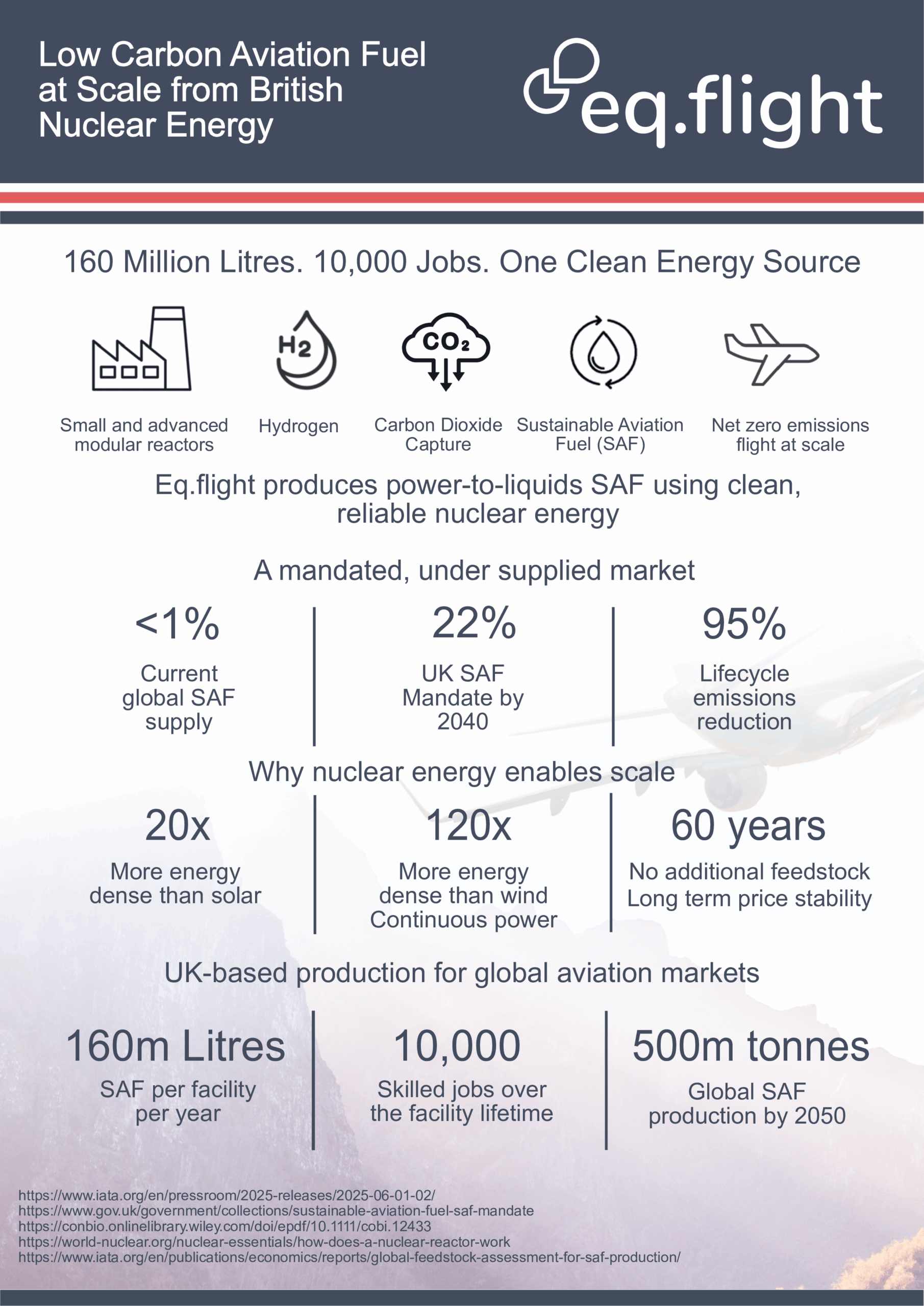
As the aviation industry seeks sustainable solutions to reduce its environmental impact, nuclear-derived sustainable aviation fuel (SAF) emerges as a promising contender. Beyond its environmental benefits, this innovative fuel source offers socio-economic advantages that can support local communities, economies and the future of air travel.
Carbon Emissions and Air Quality
One of the most compelling benefits of nuclear-derived SAF is its dramatic reduction in carbon emissions. An Eq.flight system can produce SAF with a minimum of 91% reduction in carbon intensity compared to traditional fossil kerosene. This substantial decrease plays a crucial role in combating climate change and improving air quality.
Air pollution remains a silent killer, with the World Health Organization (WHO) estimating that 2.9 million people die prematurely each year due to exposure to polluted air. By adopting nuclear-derived SAF, the aviation sector can significantly cut harmful emissions, contributing to healthier communities worldwide.
Footprint and Biodiversity
The environmental footprint of energy generation is a critical factor in sustainable development. Nuclear-derived SAF boasts an impressively low land-use footprint. Foran Eq.flight facility, the generating footprint is just 51 acres, a stark contrast to the 66,042 acres required for wind energy to produce the same amount of power.
As nuclear energy is an incredible energy sense source, its use helps preserve biodiversity and protects natural habitats from large-scale industrial projects, aligning with global efforts to protect ecosystems.
Jobs and Local Economy
Nuclear power plants are not only significant energy producers but also developers of economic growth. They create thousands of stable, high-paying and high-skilled jobs, ranging from engineering and technical roles to operations and maintenance.
The development and scaling of nuclear-derived SAF infrastructure can stimulate local economies by providing long-term employment opportunities, fostering workforce development and supporting community prosperity.
The presence of nuclear power plants and SAF production facilities can invigorate local economies. Beyond job creation, these projects stimulate demand for local services, infrastructure development and technological innovation.
Communities hosting such facilities often benefit from improved public services, educational opportunities and enhanced economic diversification, contributing to overall regional well-being. These projects also bring dedicated schemes such as apprenticeships to train young people into industry.
Energy Security
Energy security is becoming an ever-growing concern of sustainable development. Nuclear power offers 24/7 energy generation, independent of weather conditions, unlike some renewable sources. This constant energy supply ensures a reliable production of sustainable aviation fuel.
In addition to this, nuclear facilities are required to store several refuel loads on-site, reducing dependence on external factors such as geopolitical tensions or supply chain disruptions. This resilience is vital for maintaining stable fuel availability in a rapidly changing world.
—
Nuclear-derived sustainable aviation fuel represents a multifaceted solution that addresses environmental, economic and social challenges simultaneously. By drastically reducing carbon emissions, minimising system footprints, creating high-quality jobs and enhancing energy security, it offers a sustainable pathway for the aviation industry and the communities it touches.
Embracing this technology can help pave the way for cleaner skies, healthier populations and resilient economies, an inspiring vision for the future of sustainable air travel.