Contact

News and Publications

At Equilibrion we publish our news stories on our website and also all of our whitepapers, government consultation responses which you can download here.

For media inquiries please contact: info@equilibrion.co.uk

Latest news

23 posts

Equilibrion completes Eq.flight RfP process, strengthening pathway to commercial delivery

Equilibrion has successfully completed a comprehensive Request for Proposal (RfP) process for Eq.flight, taking a major step towards establishing the delivery team, technology configuration and supply chain required to support commercial-scale deployment of nuclear-enabled Sustainable Aviation Fuel (SAF).

The process was undertaken to optimise Eq.flight for deliverability, cost and scalability, with a clear focus on creating a commercially competitive Power-to-Liquids (PtL) SAF solution capable of deployment from 2032.

The RfP programme covered the principal elements required to progress Eq.flight towards delivery, including engineering and project delivery, feedstock supply, site selection and development, and the core technologies that will form the integrated PtL production system.

Completion of the process has enabled Equilibrion to define an optimised route forward for the project and positions Eq.flight to progress into Front-End Engineering Design (FEED) with an optimised technology configuration, delivery structure, site pathway and supply chain.

Importantly, the competitive process has also demonstrated the potential for significant reductions in project development and delivery costs. The resulting approach is expected to reduce the cost associated with progressing through Pre-FEED by many millions of pounds, alongside material reductions in forecast capital expenditure.

Together, these improvements strengthen the commercial proposition for Eq.flight and provide a clearer pathway towards PtL SAF production at a cost capable of competing as the market scales.

Cost competitiveness is central to the successful deployment of PtL SAF. While the underlying technologies required to produce synthetic aviation fuel are increasingly established, bringing them together into an efficient, highly available and investable production system requires optimisation across the complete value chain.

Equilibrion would like to thank all of the organisations that participated in the RfP process. The quality and depth of the responses reflected a significant commitment from organisations across the supply chain, and we recognise the considerable time, expertise and resource invested in developing and submitting proposals.

We look forward to working closely together through FEED and subsequent phases of Eq.flight with our partners as the project progresses towards delivery.

The outcome represents an important milestone for Eq.flight and for Equilibrion’s wider ambition to establish a scalable route to nuclear-enabled SAF production in the UK and internationally.

Further information on the selected organisations, technology configuration and next phase of the Eq.flight programme will be released in due course.

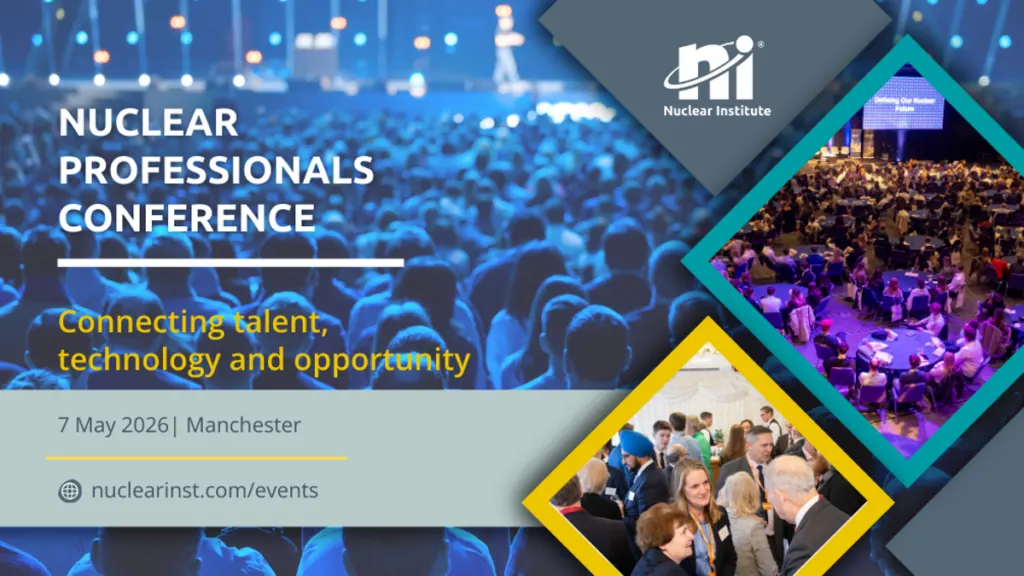
Equilibrion attending Nuclear Professionals Conference 2026

Nuclear Professionals Conference, 7 May 2026, Manchester. Connecting talent, technology and opportunity.

Equilibrion is exhibiting at the Nuclear Institute’s Nuclear Professionals Conference 2026 in Manchester

This is a Nuclear Institute event focused on professional development, skills, leadership and career progression across the nuclear sector, bringing together professionals from technical and non-technical disciplines. The event will be focused on the people behind the sector, with sessions on skills, leadership, mentoring, careers, wellbeing and professional standards, bringing together more than 500 nuclear professionals from across the industry.

As a business working across consulting and project development, Equilibrion is pleased to be part of an event centred on the people, skills and professionalism that underpin the sector’s future.

If you’re attending on 7 May at the Kimpton Clocktower Hotel in Manchester, come and speak to us.

Click Below to take part in our Nuclear Quiz

NUCLEAR QUIZ

Posted by Rob Mossop

What is Nuclear-Derived SAF?

Nuclear-Derived Sustainable Aviation Fuel (SAF) is SAF produced using nuclear energy as the low carbon energy input. In practice this usually means synthetic SAF made via a Power to Liquids (PtL) pathway. Water is split to make hydrogen, carbon dioxide is supplied as a feedstock and those molecules are converted into jet fuel. The nuclear contribution is the energy that makes the whole chain reliable, scalable and consistently low carbon.

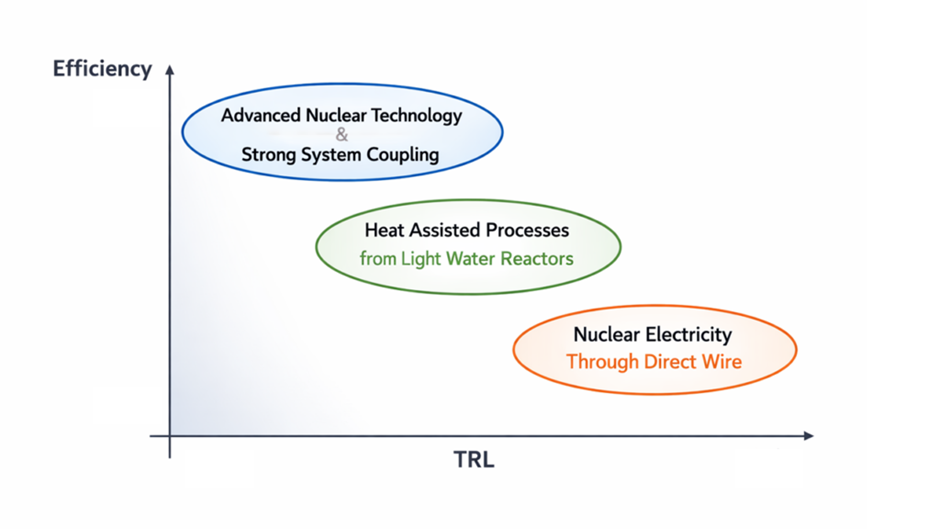
A useful way to think about nuclear SAF is as a spectrum of integration. At one end nuclear supplies electricity only. In the middle nuclear supplies electricity plus usable heat. At the far end nuclear energy and the SAF plant are engineered as a coupled system that shares utilities and controls to behave like a single high availability industrial asset.

Chart with Efficiency on the vertical axis and TRL on the horizontal axis. Advanced Nuclear Technology and Strong System Coupling sits highest and furthest left, Heat Assisted Processes from Light Water Reactors sits in the middle, and Nuclear Electricity Through Direct Wire sits lowest and furthest right.

Why is nuclear energy a good fit for SAF?

Most PtL SAF processes are electricity led industrial systems. They are capital intensive and perform best when they run steadily. Frequent ramping, pauses and restarts tend to reduce annual output, increase unit cost and introduce operational risk. Nuclear generation has a structural advantage because it is firm and predictable. It is designed to operate continuously for long periods and that lines up with the operational needs of PtL plants.

There is also a whole system efficiency consideration. Nuclear energy is a thermal technology first. Converting nuclear reactor heat to electricity and then using that electricity to recreate process that could be complete using heat, discards useful thermal energy. If the SAF plant can use some of the reactor’s heat directly, you get more useful process energy per unit of nuclear output, and you reduce the amount of electricity that has to be bought, transformed and distributed around the site.

The basic PtL route behind nuclear derived SAF

A typical nuclear enabled PtL SAF pathway looks like this

  1. CO2 supply – CO2 can come from Direct Air Capture or external sources.
  2. Hydrogen production – Water is converted to hydrogen using electrolysis.
  3. Syngas production – CO2 and hydrogen are converted into a syngas mixture using reverse water gas shift.
  4. Fuel synthesis – Eq.flight uses Fischer-Tropsch synthesis to convert syngas into hydrocarbon chains.
  5. Upgrading and finishing – The raw product is upgraded and distilled into synthetic blend component ready to be mixed with conventional fuel to power an aircraft.
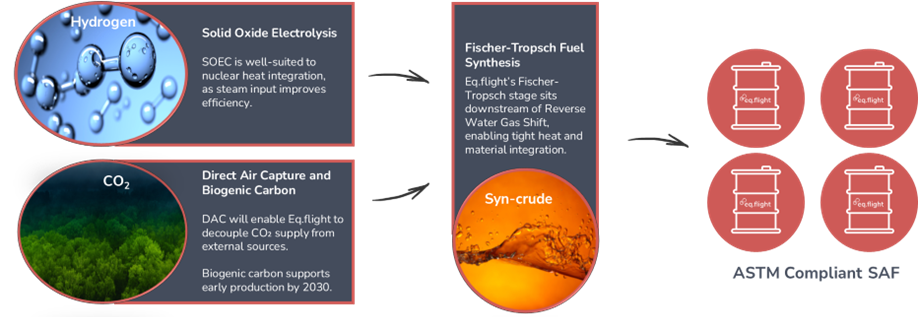
Process diagram. Hydrogen comes from Solid Oxide Electrolysis: SOEC is well-suited to nuclear heat integration, as steam input improves efficiency. CO2 comes from Direct Air Capture and Biogenic Carbon: DAC will enable Eq.flight to decouple CO2 supply from external sources, and biogenic carbon supports early production by 2030. Both feed Fischer-Tropsch Fuel Synthesis: Eq.flight's Fischer-Tropsch stage sits downstream of Reverse Water Gas Shift, enabling tight heat and material integration. The product, Syn-crude, becomes Eq.flight fuel in barrels.

The integration curve for nuclear derived SAF

  1. Nuclear energy as an electricity source only

The SAF plant runs entirely on electricity, and that electricity is provided by nuclear generation. The plant may be grid connected or directly wired, but the key point is that nuclear energy is providing low carbon electrons.

  1. Nuclear energy as an electricity source plus a heat source

The SAF plant takes nuclear electricity and also takes useful heat, typically as low pressure steam or hot water. This does not require extremely high temperature reactors. Conventional nuclear reactor secondary circuit steam and condenser adjacent heat can be valuable for many process duties.

  1. Fully integrated nuclear derived SAF

The nuclear plant and the SAF plant are designed as a coupled energy system. Electricity and heat offtake are engineered together, and the interface is designed to support high availability and predictable operations.

Nuclear derived SAF is not a single technology. It is an approach to making synthetic aviation fuel that takes advantage of nuclear energy’s reliability and its ability to provide both power and heat. The more closely the fuel plant is integrated with nuclear energy, the more benefits you can capture. Higher utilisation, lower cost pressure, fewer operational interruptions and more confidence in delivering volumes on schedule.

For Eq.flight the primary objective is to prove that a nuclear-integrated PtL plant can operate as a steady industrial asset. That means designing around continuous energy availability, making heat do as much work as possible and engineering the interfaces so the whole system behaves predictably over long operating periods.

Expression of Interest: Partners Sought to Deliver a Global Nuclear-Enabled SAF Programme

Equilibrion is leading a programme to deliver nuclear-enabled sustainable aviation fuel (SAF) on a global scale. The company is seeking expressions of interest from organisations with the capability and expertise to support its ambitions as part of future partnership arrangements that will lead to fleet deployment. This briefing document provides further information and the opportunity to register your interest.

Eq.flight is Equilibrion’s solution to using nuclear energy to enable large-scale SAF production, tackling one of the defining global challenges of our time: decarbonising aviation while building a secure and resilient energy future.

Aviation requires vast volumes of low-carbon fuel, but current pathways cannot deliver at the scale, reliability, or cost needed. With policies around the world now mandating supply, the market opportunity is significant and immediate.

Nuclear-enabled SAF uses nuclear energy to power aviation fuel production, providing a constant, low-carbon energy source that enables large-scale, reliable output, creating a global opportunity.

Delivering this requires world-class partnerships and supply chains. We are currently bringing together high-quality partners in the areas of:

  • Technology – the sub-systems required to deliver SAF production within the Eq.flight commercial systems;
  • Engineering – to deliver an optimal process and engineered system;
  • Construction – for optimal fleet plant deployment with lower risk;
  • Offtakers and infrastructure – Those with a vested interest in the fuel supply chain;
  • Fuel users that can play an enabling role in delivery and deployment.

This will create a team capable of delivering at scale and sustaining it globally, comprising partners that are motivated to contribute to the design of the delivery model and to play an active, long-term role within a trusted, outcome-focused delivery team aligned to programme performance.

The opportunity for your business is to take an early position in a new and scalable market. This is not a single project, but the start of a long-term programme with repeatable deployment in the UK and internationally.

We aim to identify high-quality partners to work with us at both project and programme levels as part of a differentiated delivery approach. Rather than a conventional supplier selection process, this is an invitation to collaborate in shaping and participating in the delivery model that will underpin long-term partnerships.

We are seeking organisations that bring not only capability, but also insight and practical experience to help define a delivery and supply chain model that is resilient and deliverable. Partnerships will span project, framework, and programme levels, with performance-based incentives.

Equilibrion brings strong leadership in strategy, policy, nuclear, and low-carbon fuels. We are seeking organisations with complementary technology IP, delivery, commercial, and technical expertise to help shape programme delivery.

Partner selection will be based on capability, impact, and alignment with our delivery approach, not organisational size.

Please click here to register your interest.

Socio-Economics of Nuclear-Derived Sustainable Aviation Fuel: A Pathway to Cleaner Skies and Stronger Communities

As the aviation industry seeks sustainable solutions to reduce its environmental impact, nuclear-derived sustainable aviation fuel (SAF) emerges as a promising contender. Beyond its environmental benefits, this innovative fuel source offers socio-economic advantages that can support local communities, economies and the future of air travel.

Carbon Emissions and Air Quality

One of the most compelling benefits of nuclear-derived SAF is its dramatic reduction in carbon emissions. An Eq.flight system can produce SAF with a minimum of 91% reduction in carbon intensity compared to traditional fossil kerosene. This substantial decrease plays a crucial role in combating climate change and improving air quality.

Air pollution remains a silent killer, with the World Health Organization (WHO) estimating that 2.9 million people die prematurely each year due to exposure to polluted air. By adopting nuclear-derived SAF, the aviation sector can significantly cut harmful emissions, contributing to healthier communities worldwide.

Footprint and Biodiversity

The environmental footprint of energy generation is a critical factor in sustainable development. Nuclear-derived SAF boasts an impressively low land-use footprint. Foran Eq.flight facility, the generating footprint is just 51 acres, a stark contrast to the 66,042 acres required for wind energy to produce the same amount of power.

As nuclear energy is an incredible energy sense source, its use helps preserve biodiversity and protects natural habitats from large-scale industrial projects, aligning with global efforts to protect ecosystems.

Jobs and Local Economy

Nuclear power plants are not only significant energy producers but also developers of economic growth. They create thousands of stable, high-paying and high-skilled jobs, ranging from engineering and technical roles to operations and maintenance.

The development and scaling of nuclear-derived SAF infrastructure can stimulate local economies by providing long-term employment opportunities, fostering workforce development and supporting community prosperity.

The presence of nuclear power plants and SAF production facilities can invigorate local economies. Beyond job creation, these projects stimulate demand for local services, infrastructure development and technological innovation.

Communities hosting such facilities often benefit from improved public services, educational opportunities and enhanced economic diversification, contributing to overall regional well-being. These projects also bring dedicated schemes such as apprenticeships to train young people into industry.

Energy Security

Energy security is becoming an ever-growing concern of sustainable development. Nuclear power offers 24/7 energy generation, independent of weather conditions, unlike some renewable sources. This constant energy supply ensures a reliable production of sustainable aviation fuel.

In addition to this, nuclear facilities are required to store several refuel loads on-site, reducing dependence on external factors such as geopolitical tensions or supply chain disruptions. This resilience is vital for maintaining stable fuel availability in a rapidly changing world.


Nuclear-derived sustainable aviation fuel represents a multifaceted solution that addresses environmental, economic and social challenges simultaneously. By drastically reducing carbon emissions, minimising system footprints, creating high-quality jobs and enhancing energy security, it offers a sustainable pathway for the aviation industry and the communities it touches.

Embracing this technology can help pave the way for cleaner skies, healthier populations and resilient economies, an inspiring vision for the future of sustainable air travel.

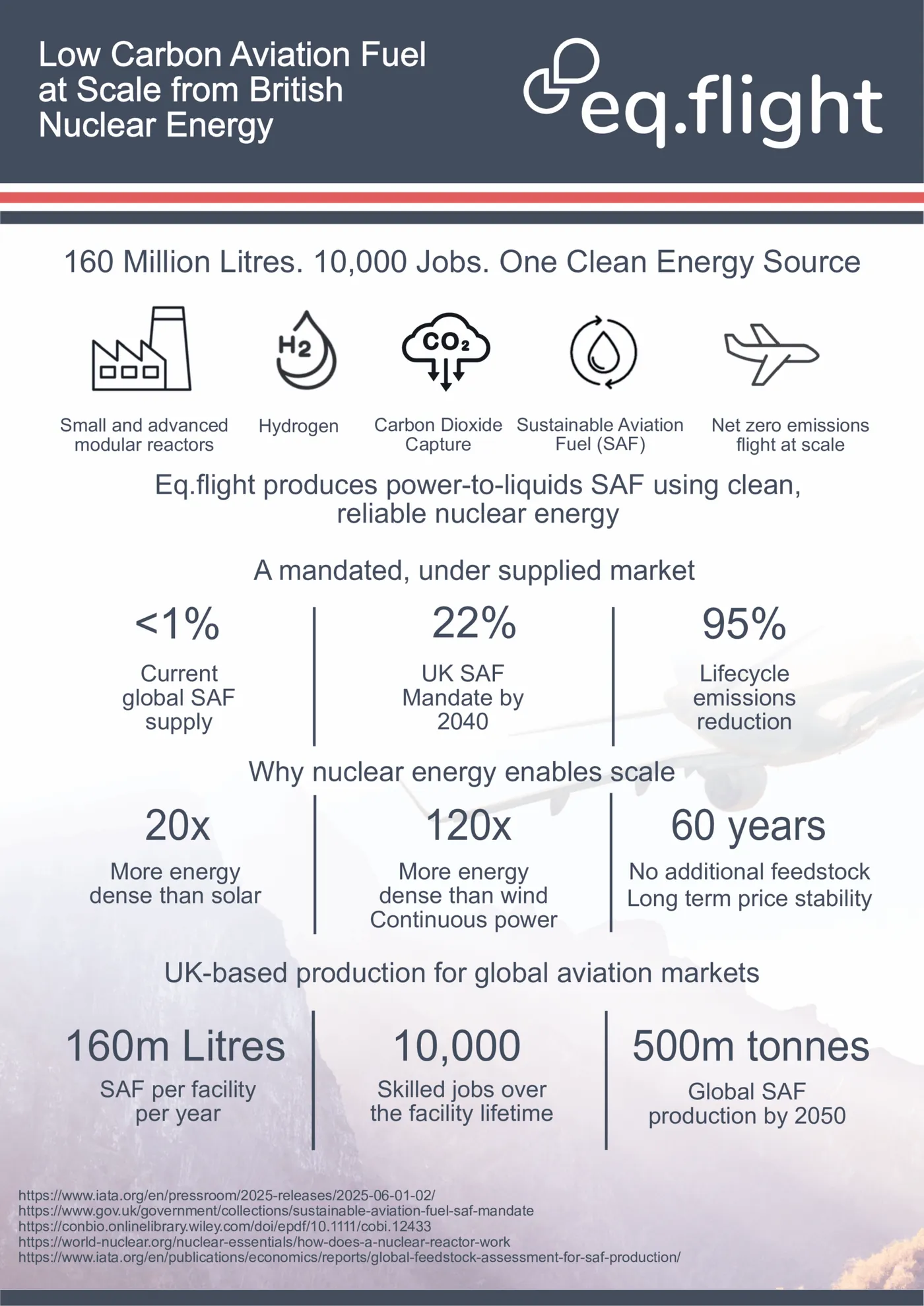
Eq.flight infographic. Low Carbon Aviation Fuel at Scale from British Nuclear Energy. 160 Million Litres. 10,000 Jobs. One Clean Energy Source. Eq.flight produces power-to-liquids SAF using clean, reliable nuclear energy. A mandated, under supplied market: under 1% is the current global SAF supply, 22% is the UK SAF Mandate by 2040, and 95% is the lifecycle emissions reduction. Why nuclear energy enables scale: 20x more energy dense than solar; 120x more energy dense than wind, with continuous power; 60 years with no additional feedstock and long term price stability. UK-based production for global aviation markets: 160m litres of SAF per facility per year; 10,000 skilled jobs over the facility lifetime; 500m tonnes global SAF production by 2050.

Equilibrion and Rolls-Royce SMR announce collaboration to advance the development of Sustainable Aviation Fuel using nuclear energy

Equilibrion and Rolls-Royce SMR have signed a Memorandum of Understanding to collaborate on a technical and economic assessment, to better understand the opportunity for nuclear powered Sustainable Aviation Fuel (SAF) using Small Modular Reactors (SMRs).

The Rolls-Royce SMR is designed to provide clean, reliable cost-competitive energy through its ‘factory-built’ SMR technology. The heat and electricity from a Rolls-Royce SMR power station is well suited to industrial processes, such as hydrogen production and synthetic fuel synthesis, that require consistent energy inputs.

Equilibrion is a UK project development and technology company creating new commercial opportunities for nuclear energy across hard-to-decarbonise industries. Eq.flight is Equilibrion’s proprietary modular system for producing SAF at commercial scale and with lower lifecycle emissions compared to other technologies making it ideal for UK and international deployment.

Eq.flight will produce e-SAF with electricity and heat -also known as power-to-liquids (PtL) SAF – which will contribute to the UK’s SAF Mandate targets. The enhanced efficiency of the system will produce more SAF using less energy and be a key enabler to securing domestic e-SAF production and the associated jobs and economic growth.

Supported by a Department for Transport grant under the Advanced Fuels Fund, Equilibrion and its partners are delivering a world-leading UK-based demonstration of Eq.flight by 2030 to confirm both the technical viability and economic case of the system.

The collaboration explores how Equilibrion’s Eq.flight SAF production system can be powered from Rolls-Royce SMR’s clean, reliable power solution. Together, the technologies have the potential to produce over 160 million litres of SAF per year per Rolls-Royce SMR, meeting around a third of the UK’s 2040 PtL target.

Aviation is one of the fastest-growing sources of global greenhouse gas emissions, yet current SAF supply meet less than 1% of global demand. With UK targets for 22% of aviation fuel to be SAF by 2040, there is a growing demand for meaningful capacity increase. This requires large volumes of low-carbon energy, a need that nuclear technology is uniquely positioned to meet.

Under the agreement, the partners will collaborate to develop a deeper understanding of the technical and economic case for global SAF production solution, optimised with nuclear energy.

The MOU supports national and international net-zero goals, strengthens energy security through domestic fuel production, and aims to enable SAF availability at volumes capable of transforming the aviation sector. Future commercial deployment is expected to support thousands of high-skilled jobs, strengthen UK industrial capability, and accelerate global SAF adoption.

Caroline Longman, Director at Equilibrion

“Aviation will only meet its climate commitments if SAF becomes available in large, dependable volumes. Nuclear-derived fuel production offers the reliability, scalability and low carbon intensity needed to deliver that future. Delivering nuclear-enabled SAF also creates long-term, high-quality employment: each Eq.flight facility has the potential to generate around 10,000 skilled local jobs over its lifetime.”

Alan Woods, Director of Strategy and Business Development for Rolls-Royce SMR

“Our SMR technology is designed to provide clean, affordable and dependable low-carbon energy, exactly the qualities required to unlock large-scale Sustainable Aviation Fuel production. The technical and economic assessment completed with Equilibrion will enable them to demonstrate how nuclear can power one of the most ambitious decarbonisation challenges in aviation. ”

About Equilibrion

Equilibrion is a strategic and technical consultancy and project development company accelerating the use of nuclear energy in non-electric applications. Founded in 2022 by Caroline Longman and Philip Rogers, and backed by a growing team of specialists, the company was established to unlock the full potential of nuclear energy and help mitigate the impacts of climate change. Longman and Rogers bring more than 30 years of combined experience delivering major nuclear innovation programmes and advising government on the role of nuclear in decarbonising transport, heat and industry.

Bristol Airport and Equilibrion complete pioneering study on Nuclear-derived Sustainable fuels

Bristol Airport and Equilibrion, supported by Q8Aviation and Exolum, have successfully completed a groundbreaking feasibility study into the large-scale production of nuclear-derived sustainable aviation fuel (SAF) and hydrogen in the South West. The project demonstrates how the region could meet Bristol Airport’s growing demand for sustainable fuels for both flight and ground operations.

The output from the work finds that Small Modular Nuclear Reactors (SMRs) could be based in the South West and used to generate both SAF and hydrogen to support the Airport’s transition to lower emissions from its operations.

The development of this technology by Equilibrion is under project Eq.flight, which has also been awarded funding from the UK Department for Transport. Eq.flight provides a long-term, low-carbon solution for aviation, with the potential to reduce emissions from Bristol Airport’s flights by 29% in 2035.

The project was funded through Bristol Airport’s Airport Carbon Transition (ACT) Programme. The strategic fund is designed to fast-track decarbonisation projects to tackle emissions from flight and transport, supporting organisations develop cutting-edge technologies that will drive the aviation industry towards zero carbon emission flights.

Hannah Pollard, Head of Sustainability for Bristol Airport, said:
“Sustainable Aviation Fuel will play a critical role in decarbonising aviation globally, but we need to ensure that there is a reliable, affordable supply. Equilibrion’s ground-breaking report shows the huge potential that nuclear-derived SAF offers.

With our region’s nuclear pedigree and available sites, the South West is well-positioned to host SMRs and lead the development of this exciting technology.”

Dr Phil Rogers, Director at Equilibrion, said:
“We are delighted to have worked with Bristol Airport through the ACT programme to support its sustainable growth and emissions reduction plans. Eq.flight provides a unique opportunity to produce low-carbon fuels close to where they are used, creating jobs, investment, and local value. Our mission to decarbonise aviation using nuclear energy is advancing rapidly, and completion of this project is a major milestone.”

Tim Barrow, Exolum Northwest Europe Business Development Manager, said:

“As work like the Eq.flight study shows, developing new sources of sustainable aviation fuel needs to be matched by the infrastructure that can support them. Reliable logistics play an important role in ensuring SAF can be moved safely and efficiently from production to airport as the market develops.”

Equilibrion response to Corporate PPA Consultation

Open call for evidence: Corporate Power Purchase Agreements

Equilibrion (Eq.flight) Response to the UK Government’s 2026 Call for Evidence

  1. How attractive are CPPAs vs other supply arrangements (by type)

As a UK SAF producer developing new capacity in response to the UK SAF mandate, long-term electricity supply is a foundational input to our project viability.

SAF production is electricity intensive. Power pricing and stability directly affect:

  • Capital investment decisions for our SAF plant;
  • Financing structures;
  • Long-term aviation fuel pricing;
  • Competitiveness against imported fuels.

Corporate PPAs are, in principle, an attractive mechanism to secure long-term low-carbon electricity and provide price certainty. However, in practice, the current CPPA market disproportionately serves large corporates. Emerging industrial producers, including SAF developers responding to government mandates, face structural barriers, particularly around credit requirements.

In addition, the current market design does not sufficiently recognise the broader economic value associated with industrial offtakers. Projects such as UK SAF production deliver strategic benefits beyond electricity consumption, including high-skilled industrial employment, regional investment in challenging economic areas, domestic supply chain development, and strengthened energy and fuel security. These wider economic contributions are not reflected in CPPA allocation outcomes, which currently favour the strongest balance sheets rather than the greatest strategic value to the UK.

Without targeted action, the CPPA market risks allocating scarce long-term low-carbon supply primarily to the strongest balance sheets, rather than to projects delivering UK industrial decarbonisation objectives.

Where government has mandated SAF blending volumes, it has a direct interest in ensuring that domestic producers can access long-term, competitively priced clean electricity to meet those obligations. Ensuring that CPPA policy supports industrial producers as well as large corporate buyers would better align energy market mechanisms with the UK’s industrial strategy and regional growth objectives.

Q2. Can CPPAs support new generation capacity?

CPPAs can support new generation where revenue certainty is sufficient to unlock financing. However, this is highly dependent on the perceived credit strength of the offtaker. Projects backed by large multinational technology firms are easier to finance than projects in emerging industrial sectors. This creates a misalignment between:

  • Government’s industrial and decarbonisation mandates (including SAF), and
  • The current operation of the CPPA market.

We also emphasise that CPPAs should not be implicitly limited to variable renewable generation which is currently implied. For electricity-intensive industrial processes such as SAF production, firm low-carbon power including nuclear, is particularly well suited.

Nuclear generation offers:

  • Predictable, continuous output;
  • Alignment with baseload industrial demand;
  • Reduced grid balancing complexity and cost.

Explicit inclusion of nuclear within CPPA policy would expand supply options for industrial users and improve overall system efficiency. To enable nuclear projects to proceed while reserving output for private offtake, thus supporting UK strategic industrial objectives, Government should consider a structured revenue floor or “backstop” mechanism that:

  • Supports financing during development;
  • Encourages full output to be contracted via private PPAs;
  • Activates only in downside scenarios.

Such an approach could materially reduce fiscal exposure relative to traditional CfDs, while enabling greater industrial participation.

Q3. What actions could government take to support CPPA growth?

From the perspective of a SAF producer delivering policy-mandated decarbonisation outcomes, the following measures are necessary to ensure equitable access to CPPAs:

1. Introduce a targeted partial credit guarantee for strategic industrial offtakers

The principal barrier for emerging industrial projects is counterparty credit risk. A government-backed partial guarantee scheme, covering a defined portion of default risk and priced on a risk-adjusted basis, would:

  • Reduce financing barriers for generators;
  • Lower transaction risk;
  • Enable industrial projects aligned with UK mandates to effectively compete for long-term supply.

This would not constitute an open-ended subsidy. Properly structured, such a scheme could operate with limited fiscal exposure while unlocking significant private capital.

Absent such intervention, CPPA markets will naturally prioritise the strongest credit profiles, potentially crowding out strategically important domestic industries.

2. Explicitly confirm technology neutrality, including nuclear

CPPA policy should explicitly apply to all forms of low-carbon generation, including nuclear. For SAF production and other electricity-intensive industrial processes, access to firm, stable supply materially reduces operational and financial risk. Excluding or implicitly deprioritising nuclear within CPPA frameworks would unnecessarily constrain industrial access to suitable generation sources. Not including nuclear equitably with other low-carbon generating technologies would be in direct opposed to wider Government policy including:

  1. Energy Act 2023, which formally set ‘nuclear-derived fuels’ into primary legislation and defined fuels produced with nuclear energy inputs as ‘Renewable Fuels of Non-Biological Origin. This defined nuclear-derived fuels as equivalent in policy to fuels derived from renewable energy inputs;
  1. SAF Mandate, which as a consequence of the Energy Act 2023 includes nuclear-derived electricity and heat as feedstock inputs to SAF production that have equivalence to renewable energy feedstock. This is mirrored in the proposed SAF Revenue Certainty Mechanism;
  1. Hydrogen strategy, which defined hydrogen produced from nuclear energy inputs as ‘electrolytic’ and therefore in the same category in policy as hydrogen produced from renewable generating assets.

Introducing a disparity between nuclear and renewable energy generators in the CPPA would materially fail pre-existing primary legislation and enormously compromise the deliverability of a wide range of directly-related Government policies. This is counter to the clear and documented intent of those policies. If the CPPA is not technology neutral, including in respect of nuclear, then there are likely to be far-reaching consequences across the policy landscape requiring major changes to pre-existing policies and mandates.

Furthermore, power-to-liquids SAF production must demonstrate ‘additionality’ whereby the most preferential production must use input electricity from generating capacity that was installed specifically for the purpose of SAF production. For this to be the proven requires the SAF producer, to be a participant in the development of the electricity generator and there are limited means of proving this was the case. A CPPA is a critical evidential element in this chain and so ensuring that all electricity generating technologies are considered equitably in the CPPA is exceptionally important if decarbonisation goals are to be achieved.

The recently published Advanced Nuclear Framework sets out Government’s ambition to enable privately led advanced and modular nuclear deployment as part of the UK’s long-term decarbonisation and industrial growth strategy. A core element of that ambition is the use of advanced nuclear technologies not only for electricity generation, but also for the direct decarbonisation of industry through high-grade nuclear heat and co-location within industrial clusters. This has clear relevance for energy-intensive sectors such as Sustainable Aviation Fuel production, where both reliable electricity and, potentially, clean process heat are critical inputs.

For the Advanced Nuclear Framework policy to succeed, there must be viable commercial routes for industrial users to contract with new nuclear projects, whether through long-term CPPAs, private wire arrangements, or co-located heat and power agreements. Consistency between nuclear policy and CPPA market design is therefore essential. If CPPAs are implicitly structured around variable renewable generation alone, they risk constraining industrial access to firm low-carbon supply and limiting the commercial viability of advanced nuclear projects intended to serve industrial clusters. Explicit recognition of nuclear, including its role in providing high-grade industrial heat, would better align electricity market policy with the Government’s strategy to decarbonise industry, strengthen regional economies, and support high-skilled employment.

Ensuring that industrial users can secure long-term nuclear power through CPPAs is not a technology preference; it is a necessary step to deliver policy coherence across the UK’s energy and industrial strategy.

3. Support aggregation, clustering and private wire models

Government should facilitate:

  • Aggregation mechanisms enabling multiple industrial buyers to contract collectively through a CPPA model;
  • Clear regulatory pathways for private wire arrangements;
  • Industrial cluster models co-located with low-carbon generation, including new nuclear capacity.

These structures can materially improve bankability and reduce transaction costs for emerging sectors.

4. Reduce transaction complexity

Standardised CPPA clauses, greater transparency on sleeving and balancing arrangements, and guidance for first-time industrial buyers would reduce friction in the market and accelerate participation.

Q4. What best practice from other markets should GB consider?

Several European jurisdictions have implemented partial state-backed guarantee schemes to address counterparty risk in CPPAs supporting new build generation. Adapting this model to the UK context, with eligibility linked to projects delivering strategic industrial outcomes, including SAF production, would better align energy market policy with industrial strategy.

Where government mandates SAF volumes and promotes domestic production capacity, ensuring that producers can secure long-term clean power is foundational to delivery.

Without structural adjustments to the CPPA framework, emerging industrial sectors risk being structurally disadvantaged relative to large multinational corporates with stronger credit ratings.

Summary

The strategic value of advanced nuclear extends beyond decarbonisation. By providing firm electricity and high-grade industrial heat within co-located clusters, nuclear can underpin the long-term competitiveness of UK manufacturing.

Ensuring that UK industrial users can secure long-term, competitively priced contracts with new nuclear projects is therefore central to rebuilding domestic industrial capacity. Without such access, energy-intensive sectors such as SAF risk structural disadvantage relative to global competitors and large multinational buyers. Aligning CPPA policy with the Advanced Nuclear Framework and pre-existing wider policy and mandates is essential if the UK is to translate policy and mandate commitments, and synergistic nuclear deployments, into tangible industrial growth, skilled employment, and regional economic regeneration.

Kent collaborates on Pre-FEED study for Eq.flight demonstration plant – A major step toward large-scale power-to-liquid SAF production

Eq.flight
Kent

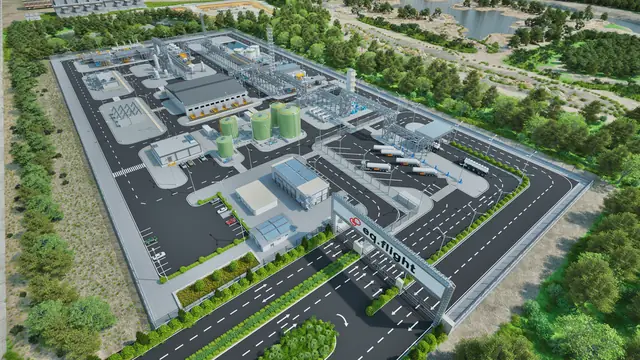
Kent, a global integrated energy services partner, collaborated with Equilibrion during the successful bid for funding from the UK Department for Transport’s Advanced Fuels Fund (AFF). With funding now secured for the Equilibrion and its partners, Kent is delivering the Pre-Front-End Engineering Design (Pre-FEED) for Eq.flight, an advanced power-to-liquids (PtL) Sustainable Aviation Fuel (SAF) demonstration plant.

Eq.flight aims to demonstrate a UK-based, highly integrated PtL SAF pathway using local electricity and heat inputs providing secure and stable production. While the design represents a nuclear-enabled production route, the demonstration plant will simulate these energy inputs to validate system performance and operational integration ahead of future commercial projects. The project forms a central part of industry efforts to support the PtL sub-target under the UK’s SAF Mandate.

As part of the collaborative Pre-FEED phase, Kent is developing the engineering design for the demonstration system. Eq.flight brings together solid oxide electrolysis, reverse water-gas shift, and Fischer–Tropsch synthesis technologies to produce drop-in SAF with potential for more than a 90% reduction in lifecycle emissions compared to conventional jet fuel. The integrated system is designed for continuous operation without reliance on backup generation or large-scale storage, offering a pathway to efficient and secure domestic SAF production.”

Les Newman, Managing Director, UK at Kent, said:

“Eq.flight marks a meaningful step in the UK’s drive to build a domestic sustainable aviation fuel sector. With stronger policy support now in place in the UK, the opportunity for projects like this to move toward commercial reality is growing. Through our work in the RISE coalition, we’ve seen the importance of aligning technology, policy, and industry capability, and Eq.flight brings those elements together in a compelling way. Our team is ready to apply its experience in low-carbon process engineering, and we look forward to working with Equilibrion and the wider consortium as the project progresses.”

Caroline Longman and Phil Rogers, Directors at Equilibrion, added:

“Eq.flight enables us to bring advanced electrolysis and synthesis technologies together in a way that hasn’t been demonstrated in the UK before. The insights gained through this phase will be critical in shaping future commercial projects. With support from our partners, including Kent, we’re well-placed to deliver a robust and informative demonstration system. Our consortium is committed to accelerating the UK’s transition to domestically produced sustainable aviation fuels, strengthening energy security while enabling airlines to meet future SAF requirements.

Power-to-liquids is recognised as a key technology for achieving the UK’s 2050 net-zero targets, enabling production of drop-in SAF from water, carbon dioxide and low-carbon electricity. Demand for PtL pathways is expected to increase significantly in the coming years as airlines, airports and fuel suppliers move to meet tightening sustainability regulations. The UK Government has supported PtL SAF projects, creating a major opportunity for domestic investment, innovation, and job creation across the energy and aviation sectors.

Kent’s role in Eq.flight supports its strategy to build end-to-end energy value chains that take responsibility for their energy inputs from day one, helping to deliver more investable, resilient, and scalable net-zero projects across the UK.”

Notes

Media Contacts

  • Jan Jamil, Kent: jan.jamil@kentplc.com
  • Archit Chopra, Media Zoo: archit.chopra@mediazoo.tv | 0751 854 7953

About Kent: kentplc.com

Kent is a privately-owned international integrated energy services partner owned by Nesma & Partners. Founded in 1919 as a small family business in Ireland, Kent is a 13,000 people strong, client-centric team and $1.7 billion-dollar revenue global business. It delivers sustainable and innovative engineering services and project delivery solutions for the oil and gas, industrial, renewables and low-carbon industries. It has a roster of blue-chip clients, including international energy companies, national oil companies, renewable energy companies, and global petrochemical companies.

About Equilibrion: equilibrion.co.uk

Equilibrion is a UK SME head-quartered in Northampton shire and the project developer of the Eq.flight power-to-liquids sustainable aviation fuel (PtL SAF) system capable of achieving higher efficiency production when powered by a combination of electricity and heat. This makes available more PtL SAF for more sustainable and secure flight and can leverage nuclear energy inputs to achieve lower cost, consistent production. In parallel Equilibrion provides strategic and technical consultancy specialising in nuclear energy. Founded in 2022 by Caroline Longman and Philip Rogers, and backed by a growing team of specialists, the company was established to unlock the full potential of nuclear energy and help mitigate the impacts of climate change.

The Nuclear Power-to-Liquids Advantage

Scaling Sustainable Aviation Fuel (SAF) via Power to Liquids (PtL) is not only about chemistry and feedstocks, or using technologies and materials that exist today for a new purpose. It is also about running an electricity-led industrial process reliably, day after day, month after month, year after year to make a material difference to emissions and improve security of fuel supplies. In that context, nuclear-powered PtL has a structural advantage: nuclear generation delivers firm, predictable, low-carbon electricity on a continuous basis, which aligns directly with how PtL facilities operate most efficiently.

PtL production chains includes multiple electricity-dependent stages that perform best during steady operational conditions. When power is variable or frequently interrupted, production facilities are forced to ramp, pause, or restart, which reduces annual output and increases product unit costs. With nuclear supply, the default operating mode is continuous for months or years on end. Work on Equilibrion’s Eq.flight project has highlighted the practical importance of designing around uninterrupted energy availability for high-efficiency PtL operations.

The operational advantages of nuclear-powered PtL are straightforward and material:

  • Higher utilisation and lower unit cost: Nuclear power’s inherent firmness supports longer durations of operation and a higher effective capacity factor for the PtL plant. Fixed costs are spread across more tonnes of SAF, and operational overhead is reduced because the facility is not repeatedly transitioning between operating modes.
  • Fewer trips and less unplanned downtime: Industrial PtL facilities are sensitive to power disturbances such as voltage dips and short outages, which can trip drives and motors, disrupt control stability, and trigger controlled shutdowns. The consequence is often disproportionate to the initial event because recovery requires careful sequencing across interconnected technologies. A dedicated, stable nuclear energy supply reduces the frequency of these initiating events and protects availability.
  • Improved quality consistency and reduced restart exposure: The most challenging periods for any complex processing site are start-ups and restarts. They increase operator workload, elevate the likelihood of off-spec production, and introduce additional safety exposure compared with steady-state operation. Nuclear-derived PtL reduces the need for restarts and supports tighter, more consistent operating windows, improving product consistency and lowering waste and rejected product.
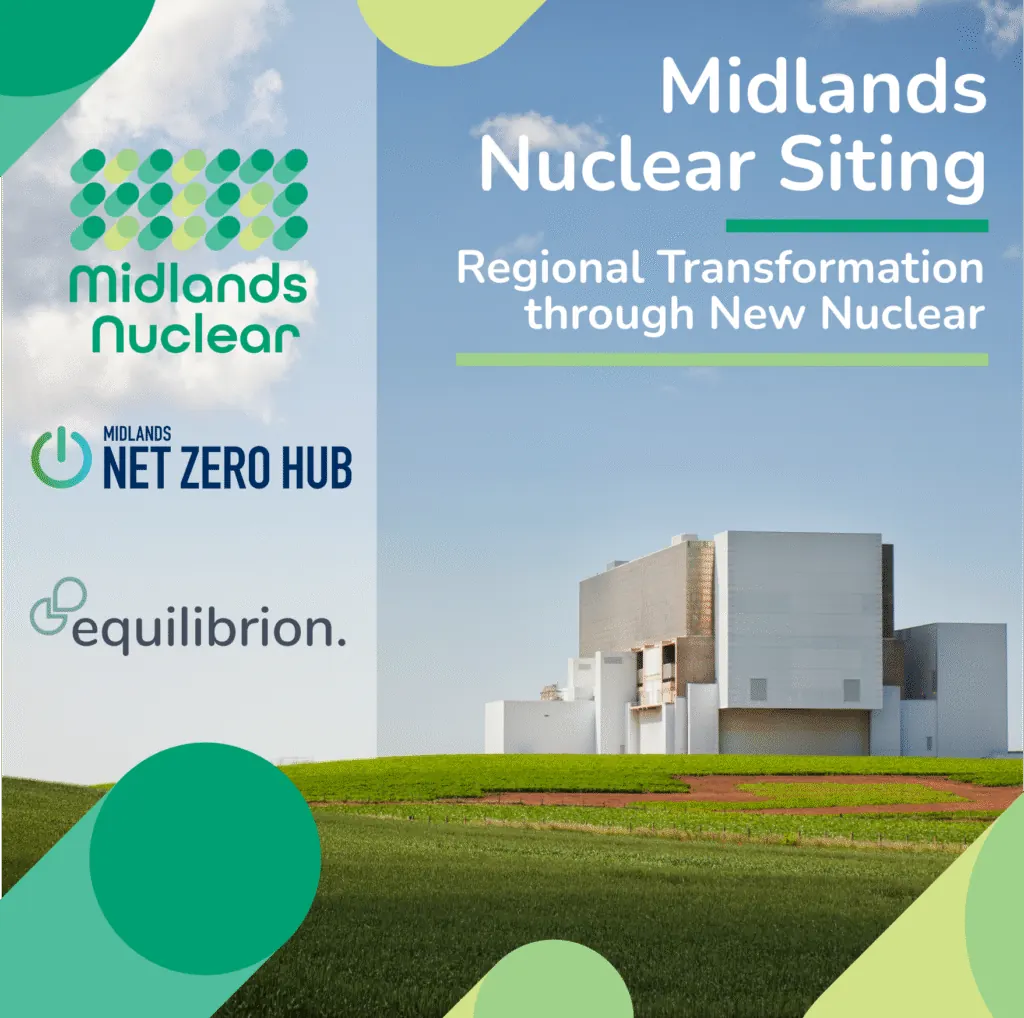
  • Lower maintenance intensity and better asset life: Frequent cycling and transient loading impose mechanical and thermal stresses that are largely avoided in steady-state operation. Over time, cycling accelerates wear and increases maintenance burden across all equipment. Stable nuclear energy supply supports predictable loads and steadier operating profiles, enabling more planned maintenance and fewer reactive interventions.
Beyond plant operations, nuclear-powered PtL strengthens the commercial proposition for SAF. The aviation value chain needs dependable volumes delivered on schedule, and projects with predictable operating profiles and fewer downside scenarios offer a lower risk to investors. Firm supply reduces the need for costly buffers and contingency measures that often get priced into contracts and financing assumptions with no hidden costs borne by electricity consumers at large for increased storage and distribution that would be required in a system where variable electricity generators dominate. It also supports credible long-term offtake commitments, because production is less exposed to interruptions that can turn into missed deliveries.

Eq.flight’s nuclear-powered PtL enables continuous operation, higher availability, more consistent quality, and a lower-risk operating model. In a sector under pressure to scale rapidly while remaining cost-competitive, that combination is a real differentiator. Reliable nuclear electricity is not a secondary consideration for PtL SAF, it is a foundational condition for high availability, competitive cost, consistent quality, safer operations, and investable performance.

For the DfT announcement of the projects £1m grant see here: Advanced Fuels Fund (AFF) competition winners – GOV.UK

For more information see here: www.eqflight.com and for a conversation or interest in being involved in the project please contact grace.hodgkiss@equilibrion.co.uk.

Equilibrion Awarded Funding for Nuclear-derived Sustainable Aviation Fuel Project

Equilibrion and its partners, including the University of Sheffield, have been awarded funding through the Department for Transport’s (DfT) Advanced Fuels Fund (AFF) to develop an Eq.flight demonstration plant towards large-scale power-to-liquids Sustainable Aviation Fuel (SAF) production using nuclear electricity and heat. The award will ensure delivery of a Pre-FEED study for a demonstration system using electricity and local heat inputs for highly efficient SAF production.

The Eq.flight system uses solid oxide electrolysis, reverse water-gas shift and Fischer-Tropsch synthesis technology to produce SAF with over 90% emissions saving compared to traditional jet fuel in alignment with the SAF Mandate and Revenue Certainty Mechanism (RCM). The use of nuclear electricity and heat inputs enables the Eq.flight system to operate all day every day without the need for costly backup generation or large energy storage systems.

The project continues Equilibrion’s strategy for projects that drive forward energy system decarbonisation and falls squarely within our Project Development arm of the business.

Power-to-liquids (PtL), which relies on low-carbon electricity and heat for its energy inputs to produce SAF from carbon dioxide and hydrogen is a key technology in achieving 2050 emissions reductions targets and the demand for fuel produced through this pathway is due to dramatically increase in the coming years. It is a priority technology for the UK Government, which has defined a PtL Mandate sub-target within the main SAF Mandate to provide revenue certainty for these projects.

There is now a major opportunity for investment and growth in domestic SAF production, using homegrown energy to create jobs across the UK and enable the UK to be less reliant on international imports. Our strategy remains true; that by building energy system value chains that take responsibility for their energy input from day one we can develop and deliver more investable, more resilient net-zero projects and more UK jobs across the energy system.

Equilibrion wishes to thank all its partners and supporters for their unwavering support and commitment to making the project a success, and looks forward to many more years of driving new opportunity for the nuclear sector and creating new energy pathways that lead to meaningful decarbonisation solutions.

For the DfT announcement see here: Advanced Fuels Fund (AFF) competition winners – GOV.UK

For more information see here: www.eqflight.com and for a conversation or interest in being involved in the project please contact grace.hodgkiss@equilibrion.co.uk.

Equilibrion Completes Midlands Nuclear Siting Study

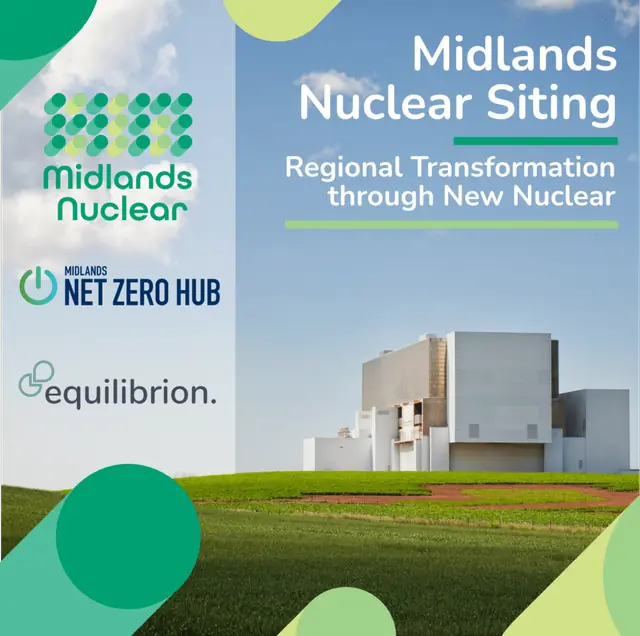
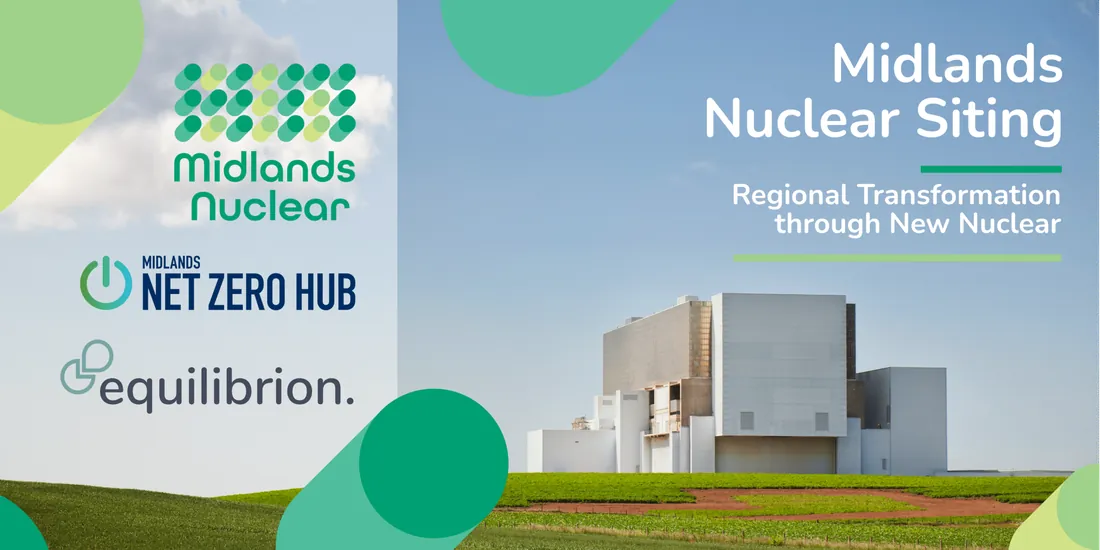
Midlands Nuclear Siting: Regional Transformation through New Nuclear. Midlands Nuclear, Midlands Net Zero Hub and Equilibrion.

Midlands Nuclear has taken a significant step toward integrating nuclear power into the region’s future low-carbon energy mix by examining and assessing potential sites for new power stations.

The siting study, commissioned and funded by Midlands Net Zero Hub on behalf of Midlands Nuclear delivered by Equilibrion supported by Portinscale Consulting, assesses where and how nuclear energy could supply low-carbon electricity, hydrogen, and sustainable fuels for industry, transport, and homes.

The UK Government outlined its commitment to clean energy in the UK’s Modern Industrial Strategy published on 23rd June. The strategy focuses on clean energy, industrial decarbonisation, and lowering energy costs, pledging to double investment in clean energy to over £30 billion by 2035.

Alongside this, up to 24GW of new nuclear capacity is planned by 2050, backed by £20billion of investment in Sizewell C and the Rolls-Royce Small Modular Reactor development being led by Great British Energy – Nuclear. Midlands Nuclear believes the Midlands could attract similar investment, strengthening energy security, advancing net zero goals, and establishing the region as a key player in the energy transition.

Forthcoming projects would support regional jobs and industrial growth enabling the Midlands to capture more of the potential 3,000 jobs[1] at peak construction for a single Small Modular Reactor and £500-660m increase[2] in local Gross Value Add from a two-unit deployment delivering almost 1GW of clean electricity.

The Midlands is already home to nuclear facilities, including the Rolls-Royce Submarines nuclear licensed operations at its site at Raynesway, Derby, and possesses a strong and capable workforce already involved in delivering and supporting nuclear projects.

The region is also rich in natural assets including the River Trent and strategic coastal and inland infrastructure. At its peak, “Megawatt Valley” generated 25% of the UK’s electricity, but with the closure of coal-fired power stations, this much needed local capacity has been lost.

Restoring the Midlands’ role in energy generation could revitalise local economies, bring energy production closer to where it’s used, and help reduce energy bills nationwide.

While already safer than most other forms of generating electricity including wind power new nuclear power station proposals must meet strict regulatory and planning requirements and pass through rigorous processes including public engagement and consultation. However, the siting study demonstrates that sites in the Midlands could pass the siting criteria including on population density, proximity to military activities and access to essential cooling water.
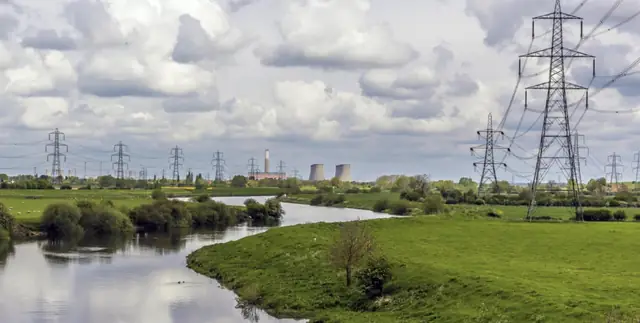
Nuclear applications could support the region by delivering consistent, reliable power for data centres, hydrogen for transport and industrial use, and heat for manufacturing and networks. Nuclear is an excellent match for these and other needs as it can produce energy on-demand and overcomes many of the challenges faced by our energy system as deployment of variable renewables increases.

With this sector-leading work now complete, the Midlands is a step closer to capitalising on the national push for nuclear energy which will create high-skilled jobs and bring new wealth to the region.

Midlands Nuclear, Midlands Net Zero Hub and Equilibrion will host a launch webinar on 8th July at 11am. For details and registration please visit: https://www.eventbrite.co.uk/e/unlocking-nuclear-potential-launch-of-the-midlands-nuclear-siting-study-tickets-1423516529259?aff=oddtdtcreator

Lord Ravensdale, Chair of Midlands Nuclear said: “This study represents a pivotal step toward future expansion of clean, secure energy capacity in the Midlands through consideration of siting options for nuclear power in the region. Coming alongside a more flexible siting policy for new nuclear from the government, it is an exciting opportunity for the region to capitalise on the revival of nuclear energy across the UK.”

Jack Hayhoe, Head of Net Zero Programmes at Midlands Net Zero Hub, said: “The Midlands Net Zero Hub is delighted to have supported the development of this study, it marks a significant milestone in the Midlands’ journey toward becoming a key player in the UK’s clean energy future. By exploring how nuclear energy can support low-carbon electricity, hydrogen production, and sustainable fuels, the region is stepping forward as a serious contender to host new nuclear developments. The Midlands is now well-positioned to attract investment, unlock industrial growth, and deliver long-term benefits for communities, businesses, and the environment.”

Professor Martin Freer, Co-Director of Midlands Nuclear and CEO of the Faraday Institute said: “Now is a fantastically good time for the development of nuclear energy sector, with government support for both small- and large-scale designs. This report puts the Midlands on the front foot regarding seizing the opportunity, creating the evidence base to build on, allowing an understanding of how nuclear energy may play into the future energy system of the region.”Dr Phil Rogers, Project Director at Equilibrion said: “We are delighted our siting study has contributed to the Midlands understanding of how the region could be a participant in the UK’s nuclear renaissance. The extensive study underpins Equilibrion’s growing capability and skills in new nuclear project and programme development at what is a pivotal moment for UK nuclear and the Midlands. We look forward to continuing our support to deliver the growth opportunities presented by new nuclear siting policy and the resurgence in demand for nuclear as a major contributor to prosperity, growth and decarbonisation.”


[1] An estimated 3,000 jobs at peak construction for Rolls-Royce SMR deployment as reported in the UK Government announcement of its selection as its preferred technology partner for Great British Energy – Nuclear.

[2] Hinkley Point C reported as adding £1.5-2Bn GVA to the South West economy based on more than 8,500 jobs at peak construction and a 3.2GW total electricity output. Figure quoted is based on this GVA figure scaled to a deployment of 1GW new nuclear, which is roughly equivalent to two Rolls-Royce SMR.

PRESS RELEASE: Midlands Embarks on Study to Assess Potential Sites for Nuclear New Build and Boost Regional Growth

MIDLANDS PRESS RELEASE

Midlands Embarks on Study to Assess Potential Sites for Nuclear New Build and Boost Regional Growth


Equilibrion, a strategic and technical consultancy, has been appointed by the Midlands Net Zero Hub and Midlands Nuclear to identify the potential of nuclear energy production in the Midlands region. Equilibrion will lead a comprehensive siting study to consider locations and sites that have the potential to be developed in the nearer term.

On the 6th February, The UK Government announced reforms on planning rules to facilitate new nuclear build projects in the UK, including a new Nuclear National Policy Statement, EN-7, for the development of nuclear power projects beyond 2025. This new approach eases some of the restrictions on the choice of nuclear sites for deployment, which had been embedded in the previous EN-6 statement. This more flexible approach is expected to attract new nuclear developments in a wider range of locations and create thousands of new highly skilled jobs while delivering clean, secure and more affordable energy for working people.

The Midlands Nuclear Siting Project, due to report in Spring/Summer 2025, will provide a deeper understanding of the opportunities nuclear provides, including the production of electricity, hydrogen, sustainable fuel and direct heat. With this greater understanding of some potential sites that could be considered by developers, the region will be able to drive inward investment and enhance regional low carbon energy supply for homes and industry. The output will also complement other activities, including academia and skills, as part of a joined-up approach to addressing new opportunities in nuclear.

With a specific focus on Small and Advanced Modular Reactors (SMRs and AMRs respectively), the study seeks to maximise the opportunity that the forthcoming EN-7 provides to regions. This includes enabling inward investment, generating significant social and economic benefits and helping position the Midlands as a leader in the development of future nuclear sites under the new National Policy Statement.

The project will engage relevant bodies, evaluate supply chain opportunities, and provide insights into the regulatory landscape considering the social, economic and environmental benefits that nuclear can bring to the region.

By proactively addressing skills and site readiness, the Midlands positions itself as a leading region ready to contribute significantly to the nation’s Net Zero targets, enhancing energy security and driving prosperity through enabling the growth of new and traditional industries.

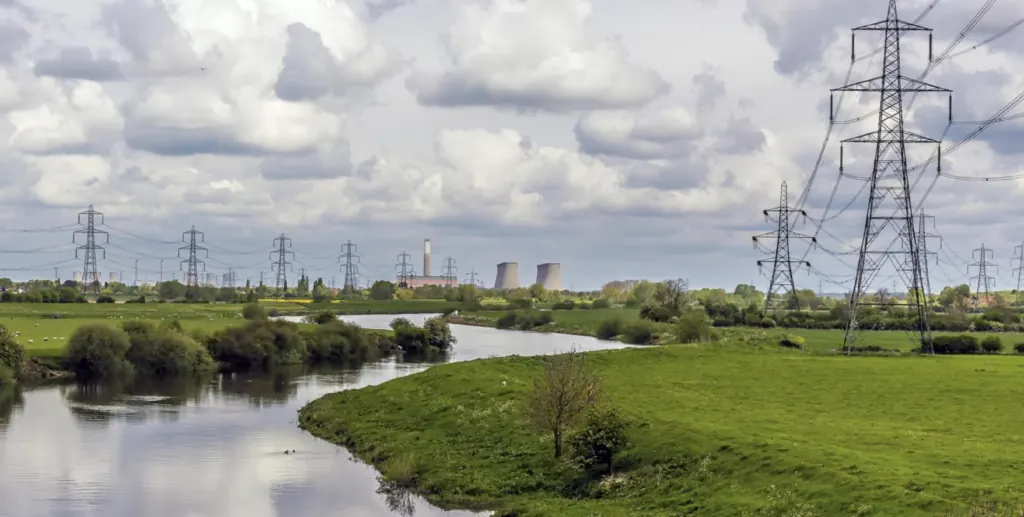
Dr. Philip Rogers, Project Director at Equilibrion, said “The Midlands has historically been a major centre of energy generation for the country but the closure of multiple coal-fired assets in the region has eroded its national contribution. This project is another step on the journey to considering how the Midlands could return to being a major energy producing region using nuclear energy.”
“We are delighted to have been awarded this groundbreaking and timely project that aligns with the most up-to-date indications of the Government’s drive for new nuclear.”

“At Equilibrion, we are committed to applying our expertise to support the UK in taking tangible steps to realising a sustainable low-carbon future including in regions new to nuclear energy and to supporting the growth of industry through the stable supply of electricity, hydrogen, heat and sustainable fuels.”

Jack Hayhoe, Head of Net Zero Programmes at Midlands Net Zero Hub, said: “We are delighted to support Midlands Nuclear with the skills and siting studies. Understanding the landscape is vital to make meaningful and strategic progress projects in the Midlands. There is a huge potential in nuclear energy generation in the Midlands and a large appetite from local specialist companies. With long development times for projects, we need to get started on these projects now to meet the Government’s ambition to quadruple nuclear delivery by 2050. We will be using the findings from the study to inform the approach to nuclear projects in the Midlands, as well as demonstrating the regional need to our funders at the Department for Energy Security and Net Zero.”

Lord Ravensdale, Chair of Midlands Nuclear, said: “Midlands Nuclear are delighted to see the potential for new nuclear in the Midlands being further explored by the project to assessing potentially suitable deployment sites. The project aligns with emergent Government thinking on new nuclear siting, making this an ideal time to build on previous work and grow understanding in this important area. The output will support a deeper understanding of how nuclear can play an important role in supporting the growth of jobs, social benefit and economic output in the region. We look forward to working with Midlands Net Zero Hub and Equilibrion through the project.”
END

Contact
For a more in-depth interview with Equilibrion Directors, Dr Philip Rogers or Caroline Longman, please contact:
Rachel Drake, Marketing Director, 07833 292252
rachel.drake@equilibrion.co.uk

About Equilibrion
Equilibrion is a nuclear strategic and technical consultancy and project development company. Formed in 2022 by Caroline Longman and Philip Rogers to realise the potential of nuclear energy and mitigate the worst effects of climate change. Caroline and Philip have a combined 30 years of delivering major nuclear innovation projects and advise on policy development on the role of nuclear in decarbonising sectors such as transport, heat and industry.

Further information on the Study

The study, funded by The Midlands Net Zero Hub is in turn funded by the Department for Energy Security and Net Zero.

The Midlands historically hosted a range of large coal-fired electricity generating assets. The area once referred to as MegaWatt Valley in the East Midlands previously generated approximately 25% of the electricity demand in England and Wales.

The current National Policy Statement for Nuclear, EN-6, identifies eight sites in England and Wales that the Government considers potentially suitable for building new nuclear power stations up to 2025. The proposed new EN-7 document updates the Government’s position and enables developers to identify and propose nuclear new build in locations additional to the eight subject to ultimate approval by the Secretary of State.

About the Midlands Net Zero Hub

The Midlands Net Zero Hub is at the centre of the region’s ambitious efforts to reach a low-carbon and clean-growth future.

Funded by the Department for Energy Security and Net Zero and accountable to Nottingham City Council, the Hub is one of five Local Net Zero Hubs across England that focus on helping the UK to reach net zero by 2050.

The Midlands Net Zero Hub supports local authorities, public sector organisations, and community groups to deliver decarbonisation strategies and projects. The Hub provides practical assistance to organisations in the region to:

  • Attract commercial investment and help local authorities and other public sector bodies to develop investment models that accelerate progress to net zero.
  • Increase the number, quality, and scale of local net zero projects being delivered in the region, including early-stage development and delivery of projects.
  • Support net zero elements in wider programmes and initiatives, for example Levelling Up agenda.
  • Support a national knowledge transfer programme to improve information sharing, training, and evaluation to strengthen and teach others.
  • Raise local awareness of opportunities for and benefits of local net zero investment.

The Hub also supports the net zero agenda through project delivery of schemes including Social Housing Decarbonisation Fund, Home Decarbonisation Skills Training Competition, and Local Energy Advice Demonstrator.

For more information on the Hub, please contact MidlandsNetZeroHub@NottinghamCity.gov.uk.

PRESS RELEASE: Unlocking the potential of a hydrogen future: Equilibrion appointed to lead groundbreaking SHyNE study on how nuclear-enabled hydrogen could help solve the UK’s Net Zero energy challenge

We’re delighted to announce that we’ve been appointed by Northern Gas Networks and Wales and West Utilities, supported by Energy Innovation Centre, to lead a groundbreaking study on how nuclear-enabled hydrogen could help solve the UK’s Net Zero energy challenge. Further details in our press release below:

Technical and strategic nuclear consultancy, Equilibrion, has been appointed by Northern Gas Networks (NGN) and Wales & West Utilities (WWU), supported by the Energy Innovation Centre (EIC), to deliver innovative research on how nuclear-enabled hydrogen could contribute to innovative solutions to the UK’s Net Zero energy challenge.

Covering the full nuclear-to-energy end-user value chain, Equilibrion’s expertise will explore how deployment of nuclear-enabled hydrogen production could support the repurposing of the UK’s existing extensive gas network for low-carbon hydrogen.

Hydrogen is currently being considered as a greener alternative to natural gas for industrial, domestic and transport customers. Nuclear-enabled hydrogen is recognised by the UK’s Low-Carbon Hydrogen Standard and uses the heat and electricity from nuclear reactors to generate hydrogen. Previous studies show that nuclear-enabled hydrogen can reduce cost for consumers, as well as providing resilience in production.
The SHyNE project will develop a deployment roadmap for capacity introduction to meet user demand, looking at estimated production rates, a geographical analysis that considers potential nuclear new-build sites in the context of existing infrastructure, customer demand centres and a techno-economic analysis.

Advancements in nuclear technology, particularly with Small Modular Reactors (SMRs) and Advanced Modular Reactors (AMRs) offer flexibility and scalable deployment options that support a robust and resilient clean energy strategy. SHyNE will build on these developments by assessing how improved siting flexibility and financing methods for reactors can accelerate nuclear deployment to support an energy transition and reduce costs for consumers.

The project will also assess how a nuclear power station, twinned with electrolytic hydrogen production, can provide flexible electricity output to help balance the grid. The SHyNE project will lead the way in demonstrating the potential opportunities for nuclear energy to help meet the UK’s 2050 net zero commitments.

Realising these opportunities is expected to attract major inward investment, creating jobs and driving social, economic and industrial benefits for communities. Adopting nuclear-enabled hydrogen complements the UK Government’s plans, with Labour expressing its intent to deliver nuclear-electricity production and being set to publish its new nuclear siting policy offering more opportunities for nuclear sites across the UK from 2025 onwards.

Allan Simpson, Chief Technologist at Equilibrion, articulates the significant step forward of wider UK nuclear energy deployment:

“Nuclear-enabled hydrogen represents a powerful, yet largely untapped, opportunity to drive the UK’s journey to Net Zero at a significant scale and for the first time both the nuclear and hydrogen sectors can fully appreciate how working together can be a game-changer to the availability of low-cost electrolytic hydrogen and expand opportunities for organisations in both sectors”

“We are committed to enhancing the opportunities for collaboration between the hydrogen and nuclear sectors for mutual benefit and are delighted to be appointed by Northern Gas Networks and Wales & West Utilities to advance the role of nuclear energy in delivering scalable, low-carbon hydrogen through the existing gas infrastructure. This project supports the foundation for a sustainable energy transition, bringing clean energy and substantial socio-economic benefits to communities across the UK.”

Commenting on the project on behalf of WWU, Matthew Hindle, WWU’s Head of Net Zero & Sustainability said:

“We know that low carbon hydrogen needs to play an important role in supporting the UK’s energy transition – including blending into existing natural gas supplies, or in its pure form for industry, transport, electricity generation and homes. To reliably produce sufficient hydrogen to meet these demands, it will be vital to diversify production methods and increase the levels of firm capacity needed for predictable supply.

“We’re excited to work with Equilibrion and NGN to better understand how nuclear-enabled hydrogen can support gas customers through the energy transition, by providing reliable, scalable low-carbon hydrogen for supply into the UK gas networks. SHyNE can support the reuse and adaptation of existing infrastructure to reduce costs, while accelerating the energy transition and enhancing energy security.”

NGN Innovation Manager Lewis Kirkwood highlights the importance of projects like SHyNE in supporting the UK’s energy transition:

“Hydrogen can be a key enabler of accelerated decarbonisation for industry, transport and heat, and as an energy network it’s critical we understand all the angles for hydrogen production and what’s required to ready our infrastructure.

Network Innovation Allowance projects such as this are essential to unlocking the potential for hydrogen investment, to support the UK’s decarbonisation strategy and diversify its energy portfolio, reduce reliance on fossil fuels and shore up energy security.”

FURTHER INFORMATION ABOUT EQUILIBRION

Equilibrion is a strategic and technical consultancy and project development company, supporting businesses across the full nuclear to end user value chain. Formed in 2022 by Caroline Longman and Philip Rogers, and supported by a growing team of experts, to realise the potential of nuclear energy and mitigate the worst effects of climate change. Longman and Rogers have a combined 30 years of delivering of major nuclear innovation projects and advise on policy development on the role of nuclear in decarbonising sectors such as transport, heat and industry. 
To organise an interview with Equilibrion please email Rachel Drake at rachel.drake@equilibrion.co.uk or call Rachel on 07833 292252

For more information visit the Equilibrion website.

FURTHER INFORMATION ABOUT NORTHERN GAS NETWORKS (NGN)

Northern Gas Networks (NGN) is the gas distributor for the North of England.
Since its inception in 2005, NGN has been leading the way as one of the most cost-efficient of the UK’s eight gas distribution networks, delivering excellent value for money to customers while providing significant social and economic benefits to the region.

NGN is known for its dynamic, passionate, conscious and people-focused team that safely and reliably delivers gas to over 2.9 million homes and businesses across the North East, northern Cumbria, and much of Yorkshire. While NGN does not source the gas, fix boilers and appliances, or manage plumbing, it collaborates with those who do to distribute gas through a vast network of underground pipes that are constantly being upgraded and invested in.

NGN explores cutting-edge thinking, revolutionary engineering practices, and world-class science to find new ways of providing sustainable sources of energy. NGN works around the clock to ensure customers remain connected and safe.

For more information visit the Northern Gas Networks website.

FURTHER INFORMATION ABOUT WALES & WEST UTILITIES

Wales & West Utilities, the gas emergency and pipeline service, brings energy to 7.5 million people across the south west of England and Wales, and provides gas emergency services.

For more information visit the Wales & West Utilities website. has context menu

Equilibrion publishes open letter to Fintan Slye, Director of the Electricity System Operator

For a balanced and just transition, we consider that near term decisions to support accelerated decarbonisation of our electricity grid, should be balanced with the longer term needs of the whole energy system to ensure intergenerational equality and resilient, secure low-cost operations over decades.

Please find our latest press release in which Dr. Philip Rogers, Director at Equilibrion, has highlighted our position in an open letter to Fintan Slye, Director of ESO, underscoring the necessity of a balanced energy approach including nuclear, to build a resilient and sustainable energy system for future generations.

Equilibrion advocates for the inclusion of nuclear energy in achieving the UK’s 2030 clean power targets and beyond. “To meet our environmental goals and ensure energy security, it is critical that nuclear energy plays a central role in our national strategy,” stated Dr. Philip Rogers, Director at Equilibrion.

In response to the recent ‘SOS’ titled open letter from Ed Miliband and Chris Stark to Fintan Slye, Director of the National Grid ESO, calling for independent advice on achieving the 2030 clean power goals outlined, Dr. Rogers has penned his own open letter to Fintan Slye, engaging further in the dialogue about the UK’s clean energy goals.

Within the letter, Dr. Rogers emphasises the importance of incorporating nuclear energy due to its reliability and low carbon emissions. “As we plan for 2030 and beyond, integrating nuclear power will provide the stable and sustainable energy foundation necessary for our clean energy grid,”

“The choices we make up to 2030 are crucial not just for meeting imminent targets but also for setting the groundwork for sustainable energy deployment to ensure intergenerational equity for both current and future populations” Dr. Rogers said “Our concern is that the sprint for 2030 will result in decisions that are detrimental to the long term, thus repeating the cycle of short-term thinking that in particular has plagued the nuclear sector, resulting in major underinvestment over the preceding decades and now a frantic rush to rebuild the sector.”

Highlighting the challenges of relying increasingly heavily on renewable resources, Dr. Rogers points out the importance of a diverse and resilient energy system that balances the limitations of wind and solar with other technologies to overcome intermittency and the impact on grid stability. “Whilst we support the use of renewable energy sources in various applications, over-reliance on wind and solar will be entirely insufficient to tackle the climate crisis, even with the most ambitious of roll out.” Dr. Rogers added.

Rogers is advocating for a balanced approach that leverages both renewable and nuclear energy to create a resilient, decarbonised energy system. This strategy not only addresses the immediate needs but also sets a sustainable course for future generations.

“Whilst this decade is critical, the true measure of our success will be in our sustained efforts beyond 2030. We get what we build for, and we welcome an open dialogue to support the development of a clean energy system that benefits all.”

Equilibrion welcomes UK Government Commitment to Sustainable Aviation Fuel

Nuclear power is essential for meeting the UK’s ambitious Sustainable Aviation Fuel (SAF) targets, says Equilibrion, a UK project and development company specialising in the use of nuclear energy for net zero and creator of Eq.Flight, a SAF production system capable of slashing aviation fuel emissions by up to 91%.

In response to the recent statement to Parliament on SAF initiatives (22nd July), Equilibrion highlights the critical role that nuclear power plays in achieving the UK’s targets to kick-start economic growth and establish Britain as a ‘clean energy superpower.’

Today, fossil fuels remain the largest source of greenhouse gas emissions. While renewables such as wind and solar are advancing, they face major limitations in scalability and in meeting demand, particularly in sectors where electrification is infeasible.

The aviation industry relies almost entirely on fossil fuel kerosene, making it one of the most carbon-intensive forms of travel. The industry has challenging emissions reduction targets but faces an uphill struggle in securing the energy needed for the cleanest SAF production.

To meet near-term SAF usage targets, the aviation sector has turned to less environmentally friendly solutions that are in such limited supply that it is falling short of the International Civil Aviation Organization’s (ICAO) goal of achieving net zero carbon emissions from international aviation by 2050.

“The UK government’s SAF mandate targets 22% SAF use in total jet fuel demand by 2040. To achieve this, a reliable and consistent energy supply is essential. Nuclear energy, often overlooked, is the only long-term solution that can sustainably meet this need.” says Caroline Longman, Co-Founder of Equilibrion. “Nuclear is essential for decarbonising air travel and ensuring a sustainable energy future, and both UK and international governments acknowledge this by including it in their aviation decarbonisation policies” she adds.

Government supported analysis shows that SAF produced using energy from nuclear provides the cleanest form of air travel and calculations by Equilibrion agree. A single Small Modular Reactor (SMR) can produce at least 92,000 tonnes of SAF annually, which would power 2,100 London-New York flights, create 6,000 jobs and reduce greenhouse gas emissions equivalent to the annual energy use of 62,000 homes, demonstrating significant environmental and economic benefits.

Longman also welcomes the recent statement from Ed Miliband, Secretary of State, who reaffirmed the government’s commitment to nuclear power in order to establish Britain as clean energy superpower. “We are committed to using nuclear energy to cut carbon emissions from heating, transport, and industry,” says Longman. “Our goal is to build the UK’s first large-scale facility that produces PtL (Power-to-Liquid) using nuclear power. By 2035, we aim to produce at least 30 million US gallons (92,200 tonnes) of nuclear-enabled PtL. This effort will reduce CO2 emissions by over 300,000 tonnes per unit each year, enhance energy security, create well-paying clean energy jobs in the UK, and make the UK a global leader in PtL production.”

However, Longman warns that significant investment is required, and quickly. “The civil servants working on this policy area have made remarkable progress so far. However, any delay in implementing the Revenue Certainty Mechanism could jeopardise the ability of projects like Eq.Flight to secure investment. There is still a long way to go, and we firmly believe that the UK’s path to net-zero flight requires the scalability and sustainability of nuclear energy. With Eq.Flight, this approach will also be more cost-effective, sustainable, secure, and will create more UK jobs compared to other SAF production pathways.”

The role of nuclear to decarbonise air travel is fully supported by Tom Greatrex, Chief Executive of the Nuclear Industry Association, who calls for a new nuclear programme. “Exciting solutions like sustainable aviation fuels need the clean, concentrated, and reliable energy that nuclear alone provides. A comprehensive new nuclear programme can help Britain go beyond decarbonising the power supply to become an industrial leader in sectors net zero aviation and seize the full opportunities of a green economy” said Greatrex.

About Equilibrion and Eq.Flight

Equilibrion is a nuclear strategic and technical consultancy and project development company. Formed in 2022 by Caroline Longman and Philip Rogers to realise the potential of nuclear energy and mitigate the worst effects of climate change. Caroline and Philip have a combined 30 years of delivering of major nuclear innovation projects and advise on policy development on the role of nuclear in decarbonising sectors such as transport, heat and industry.

Our Response to the DESNZ Alternative Routes to Market Consultation

Formal consultations are a hugely valuable part of the process of engagement between industry and His Majesty’s Government (HMG), providing industry with a voice in Whitehall and offering HMG civil servants with access to technical insights and market expertise. Responses can also provide a mandate for HMG to enact policy and funding interventions based on industrial needs. Synergistically, these then support the delivery of related HMG policies on the basis that industry and markets are fundamental to a nations ability to deliver on policies set by their governments.

We find this complementarity fascinating and rewarding to engage with. That’s why we prioritise responding to consultations where we have relevant knowledge and believe our business can have impact. As a small business we are also passionate for the SME voice to be heard, even if that means devoting relatively more time than for a larger organisation.

This is why we were delighted to submit our response to the Alternative Routes to Market consultation in April, which we have shared on our website at the link below. We would also like to congratulate the Department for Energy Security and Net Zero team responsible for the consultation on making it possible for us to have a voice at all through this forum. Sometimes just getting to the point of issuing a consultation can be along road, and the nature of this one in particular shows the forward thinking nature of the DESNZ Nuclear Teams.

You can read our response here.

Capital Project Review Call for Evidence

Equilibrion was delighted to contribute to Labour’s Capital Projects review, which was receiving evidence on how HMG could promote and better manage UK capital projects and unleash the potential of levelling up and UK content. We focused particularly on the opportunity that nuclear and nuclear-derived SAF offers for maximising the socio-economic benefit of capital projects and how nuclear projects, whether their output be used for electricity, hydrogen, SAF, methanol, direct industrial heat or ddistrict heating, promote energy security of supply, build UK supply chains and maximise GDP from the energy consumed. Capital projects that start with the energy from nuclear maximise the value of the money we all pay for energy, enabling each person to see the returns several fold through a stronger economy and better jobs.

You can view our submission here.

High-profile attendance for Equilibrion at General Conference

The IAEA General Conference is one of the most important events on the international nuclear calendar and this year the UK hosted a side event on the role of advanced technologies.

Equilibrion was absolutely delighted to be invited by the UK Department for Energy Security and Net Zero (DESNZ) to participate in the panel discussion alongside Rolls-Royce SMR, the IAEA Director General Raphael Mariano Grossi and Minister Andrew Bowie.

The session was packed with standing room only while Caroline Longman, Director, outlines how dedicated nuclear energy could be deployed to drive the production of low-carbon nuclear-derived fuels for use in aviation, shipping and heavy transport.

Equilibrion is passionate about how nuclear can support decarbonisation in new, innovative ways and the UK is leading the way. With nuclear included in both the Hydrogen Business Model, Renewable Transport Fuel Obligation and proposed within the Sustainable Aviation Fuel Mandate, is there a better place in the world to develop a nuclear-derived fuels project than the UK right now? We don’t think so.

Flyer for the side event Advanced Nuclear Renaissance: Accelerating Energy System Decarbonisation, Monday 25 September, 17:15 to 18:30, Conference Room M4, M Building, ground floor, with the speakers and panellists listed.

Equilibrion marks its first year in the NIA nuclear jobs map

NIA Jobs Map, Nuclear Industry Association.

One of the most significant risks a new company faces is being overlooked amongst the crowd of larger companies. That’s why being literally ‘on the map’ means so much to us.

If we are to deliver the ambition of up to 24 GW of new nuclear in the UK by 2050, the sector needs to access capability right across the UK. This includes attracting young talent into the sector straight from education, providing high-value opportunities to those whose jobs may be at risk from the energy transition and attracting capability from other sectors when individuals are excited by the nuclear sector.

This year we are three, but after a year of going from strength to strength who knows where we will be next year! Be sure to check back to see our progress.

The nuclear jobs map from the NIA is available here: NIA Jobs Map 2023 – Nuclear Industry Association (niauk.org)

Equilibrion Responds to Hydrogen Blending Consultation

Providing input to Government is a fundamentally important part of being an active member of industry and we take our role in this area very seriously to ensure that the voice of the nuclear sector is heard in parts of Government where traditionally nuclear has not engaged.

Consultations provide the perfect opportunity to deliver meaningful contribution through formal processes and this month we were delighted for the opportunity to input to the Department for Energy Security and Net Zero Hydrogen Team on the role of nuclear in decision-making on hydrogen blending.

Our stance is purely that the potential availability of hydrogen from nuclear should be a strategic consideration in wider decision-making on hydrogen blending. Doing so will ensure robust decisions based on considering all the available sources of hydrogen.

We also took the opportunity to reiterate why nuclear is an ideal input energy source for hydrogen production!

You can read our response in the downloads section of our website here.

Headline participation for Equilibrion at Nuclear Live ’23

In a net zero world, the role of nuclear extends far beyond baseload electricity and can deliver decarbonisation of industry, transport and more through long-term planning and system thinking. This was the case made by Caroline Longman at Foresight’s Nuclear Live ’23 conference in London, which was moderated by Phil Rogers.

As a new company with a clear objective and a passion for making change, we are delighted that Equilibrion was able to present its vision for nuclear in a net zero world. Alongside Great British Nuclear, Rolls-Royce, X-energy and many more prestigious nuclear and non-nuclear sector organisations, Caroline outlined how we are playing our role and laid a few teasers for what might come next from Equilibrion too!

Eric Lewis, the conference organiser attracted both nuclear technology companies and energy-intensive users to the conference providing a platform for compete value chain decarbonisation solutions to emerge in sectors where emissions are hardest to abate.

At the same time, Allan was also on stage at the YGN conference at Magna, Rotherham, so it was a busy day!

YGN hears from Chief Technologist on whole system decarbonisation

Nuclear has a golden opportunity to support whole system decarbonisation, both in the UK and internationally, but for the technology to achieve its potential requires working in harmony with other energy sources and clear messaging on its value in a changing energy system.

At the 2024 YGN conference, our Chief Technologist articulated the case for nuclear in whole system decarbonisation and how in a future energy system it must extend its value proposition beyond baseload generation in remote locations.

Our energy system is changing with an increasing reliance on variable, dispersed energy sources that require backup generation and high levels of energy storage. To achieve economic success, nuclear projects must fully appreciate their value proposition in this new environment, whether it be off-grid production to major energy consumers, or operating flexibly on the grid to maximise the value of renewable output when it is available and minimising the cost of compensating for the inherent variability of output.

We believe that by speaking with a common voice and in the language of whole system decarbonisation the nuclear sector can ensure its value is not overlooked by stakeholders and decision-makers, thereby ensuring we maximise the emissions reduction that we can deliver.

Get in touch

The technical expertise behind big decisions

Bringing clarity to complex challenges across nuclear, energy and industry